Bytown Bicentennial Bytes
To help celebrate the 200th anniversary of the founding of Bytown in 1826 and the beginning of the construction of the Rideau Canal, we have created a series of BICENTENNIAL BYTES about some of the key places — buildings, structures and landscapes — that help capture some of our shared history.
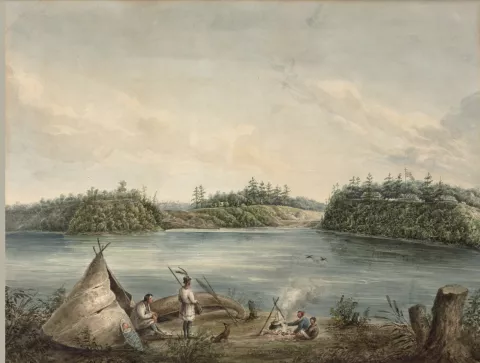
Bytown 200
1. In the Beginning…
The story of Bytown begins with its interconnecting waterways and natural gathering places along the well-travelled trading routes used by Indigenous peoples for millennia.
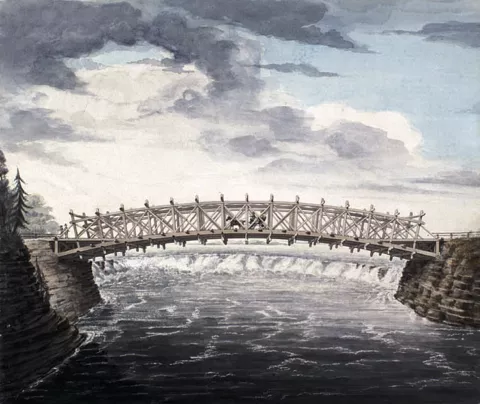
Bytown 200
2. Colonel By’s Chaudière Bridge
Recognizing the need for the building materials, labour, and essential knowledge early American settler Philemon Wright’s community would contribute to his project, By set out to construct the first bridges to connect…
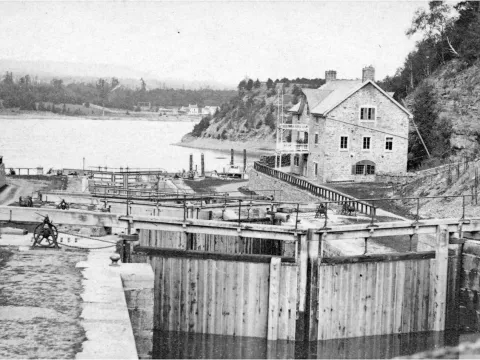
Bytown 200
3. The Ordnance and Engineers Building
When Lt.-Col. John By arrived in the area in 1826, his first requirement was to construct a place for his canal design team of Royal Engineers and civilian employees to work. The Ordnance and Engineers Building would be…
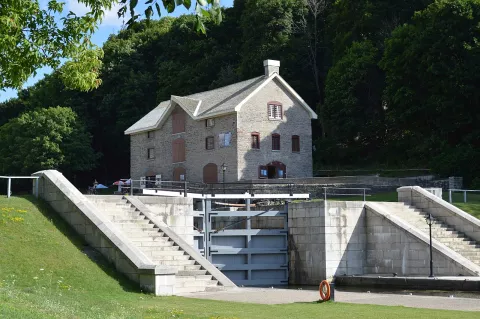
Bytown 200
4. The Commissariat Building / Bytown Museum
No place is more closely linked to the founding of Bytown than the Rideau Canal, and the most iconic site of the whole Canal is the flight of eight locks which link the Canal with the Ottawa River. Built from 1826 to…
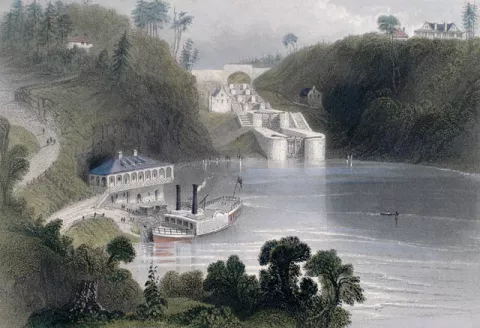
Bytown 200
5. Steamboat Landing
When Colonel John By arrived in the area in 1826, there were only two wharves on the Ottawa River. One served Wright's Town (or Wrightstown), on the north shore at the foot of what is now Hull's Rue de l'Hotel de Ville…
Bytown 200
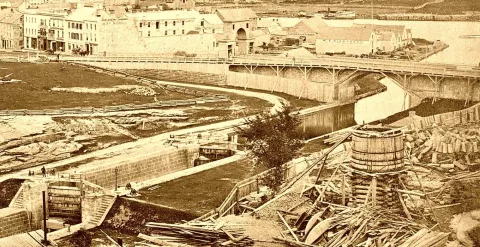
6. Sappers’ Bridge
Built in 1827 by the Royal Sappers and Miners, a construction corps established in 1812 under the British Board of Ordnance, Sappers’ Bridge was the first and for many decades the only bridge to span the Rideau Canal to…
Bytown 200
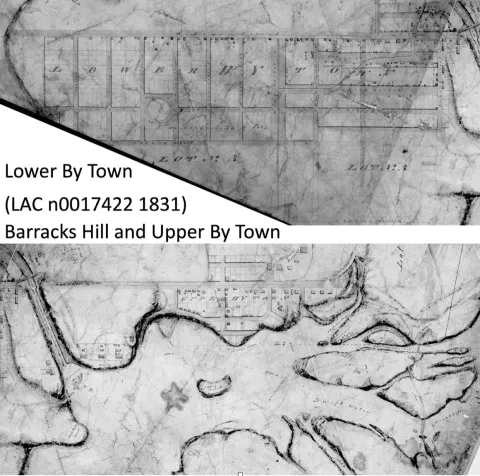
7. Colonel By’s Town Plans and Street Naming
Lord Dalhousie, Governor General of British North America in the 1820s, acquired land in the area surrounding the Rideau Canal entrance on behalf of the British Ordnance. It was this land that Colonel John By used to…
Bytown 200
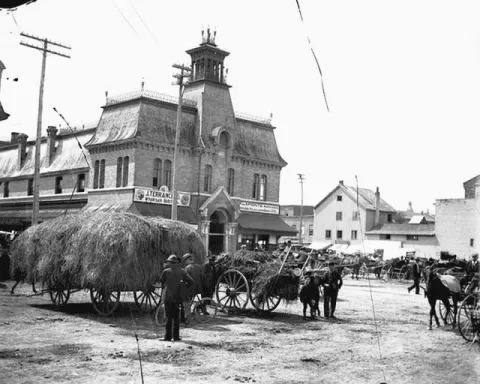
8. ByWard Market Building
Colonel John By’s settlement plans included extra wide streets in Lowertown intended for commercial activity. It was on George Street, near Sussex, that he established the first public market stalls in Bytown in the…
Bytown 200
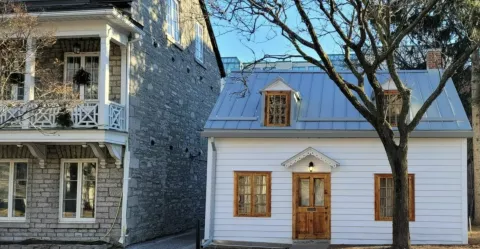
9. Flavien Rochon House
“The sun in the late evening just comes pouring through the windows and bathes everything in this beautiful orange gold, and you see all the old wood just light up with colour. This house is in many ways reflective of…
Bytown 200
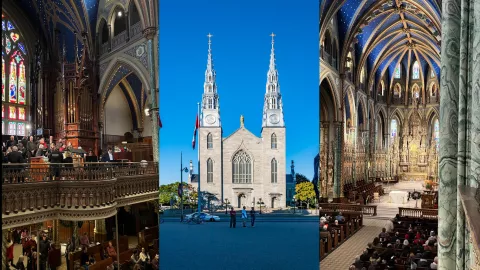
10. Notre Dame Cathedral Basilica
In 1841, when Ottawa was still muddy Bytown, construction began on one of its most ambitious and ultimately, most cherished structures that remains a dominant feature of Lowertown's skyline.
