Lecture Series
Heritage Ottawa has lined up an enticing program for our 2026-2027 Free Lecture Series!
We ask that you PRE-REGISTER in advance of each free lecture.
The lectures begin at 7 pm and are presented via ZOOM, unless otherwise indicated, and last approximately one hour.
Note: Several of our lectures are available for viewing on Heritage Ottawa's YouTube channel .
Upcoming Lectures
Past Lectures
MacDonald Gardens: A Study in Community Heritage
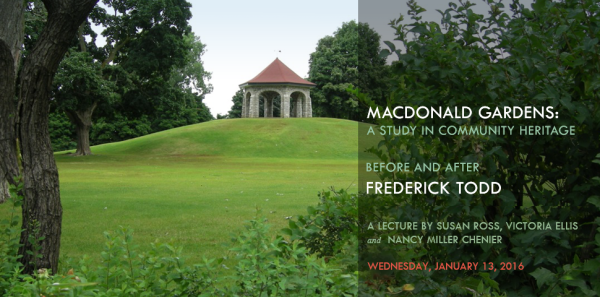
BEFORE AND AFTER FREDERICK TODD
The park at the centre of Macdonald Gardens commemorates the graveyards of four congregations from 1845 to 1873.
This lecture will reveal how landscape architect Frederick Todd designed the park as part of capital landscape planning in 1912, while 1970s urban renewal reshaped the larger community. Today this evolving neighbourhood in Lowertown East remains a uniquely diverse illustration of the city’s landscape, housing and institutional history.
Landscape Architecture in Canada 1870 - 1920
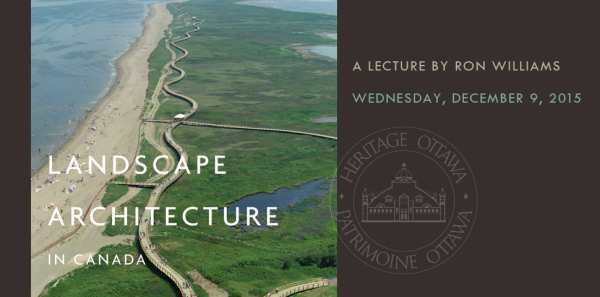
This well illustrated talk explores the outstanding work carried out in the creation of Canada's public open spaces and institutions from about 1870-1920, when the vast majority of our key institutions (primarily governmental / educational / institutional) were established in a new nation. These special public places and institutions were designed by professionals, often landscape architects, and both buildings and landscapes were of very high quality.
The talk will also consider whether we are losing our way in this area today, with a "call to arms" to preserve important landscapes.
CRAFT, HERITAGE AND DIGITAL TOOLS
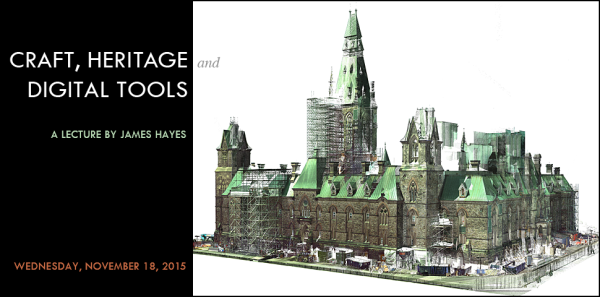
Digital technologies play an increasingly significant role in large, complex heritage documentation projects such as the one under way for the Parliament Buildings National Historic Site of Canada. Research at the Carleton Immersive Media Studio is investigating how the data created by these technologies can play a direct role in restoration work.
This lecture will examine a series of projects where digital technologies augmented traditional craft in the repair of stone carvings on the East and West Block.
Click here for a short video presentation by James Hayes regarding the role of technology in rehabilitation of the West Block.
REINVENTING BUILDING 94 AT THE CENTRAL EXPERIMENTAL FARM
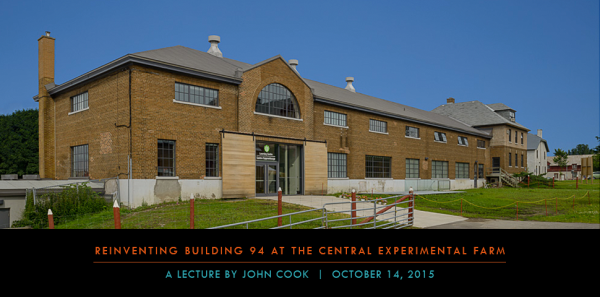
The masterful re-purposing of Building 94, a "Recognized" Federal Heritage Building on the Central Experimental Farm National Historic Site, was carried out under the direction of John Neuert of Baird Sampson Neuert Architects and John Cook of GRC Architects in joint venture with BSN Architects.
This project involved the rehabilitation of the former Machine Building into one of the newest and most imaginative museums in the National Capital. Now the Canadian Agriculture and Food Museum, this project won the City of Ottawa's Architectural Conservation Award of Excellence for Adaptive Re-use in 2013.
Recently, the project was also named a winner of the 2015 Ecclesiastical Insurance Cornerstone Awards for Building Heritage to be presented by The National Trust for Canada, in the category of Adaptive Reuse / Rehabilitation.
John Cook is a principal of GRC Architects, and has worked on numerous heritage conservation projects in Ottawa.
The Lecture is free and there is no need to pre-register.
Behind Closed Cells: The Architecture of Canada's Jails and Prisons
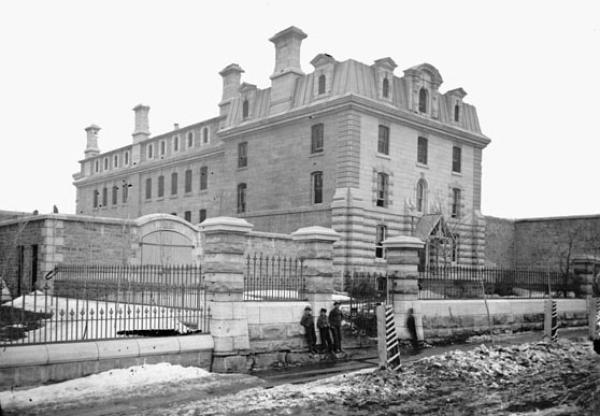
For over a century, the intimidating architecture of Canadian prisons inspired sentences to be carried out in solitude and silence.
Set within Ottawa's own historic jail, this lecture will focus on the 19th and early 20th centuries to illustrate how architecture was a critical tool for commmunicating changing ideas regarding criminals and their confinement.
OTTAWA'S RURAL AND SUBURBAN HERITAGE
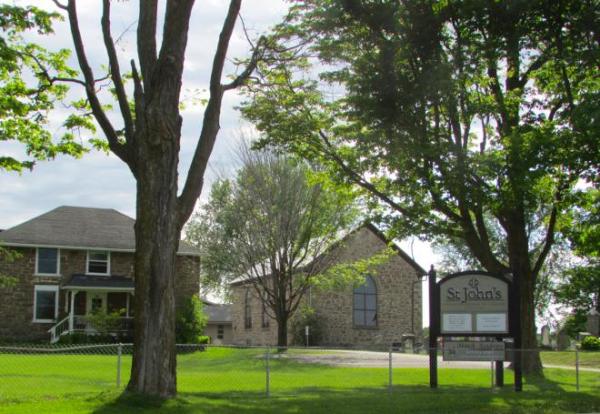
Followed by an optional bus tour of Beaverbrook to 6:30 pm
PLEASE NOTE: Registration for this event is now closed.
Join us for this informative, one-day event of presentations, walking tours and practical information focusing on Ottawa's Rich Rural and Suburban Heritage.
In keeping with the theme, this year’s event takes place at St. John's Anglican Church, South March, located at 325 Sandhill Road in Kanata.
Bruce Elliott, Professor of History at Carleton University, will deliver the keynote address on the topic of South March as an exemplar of the successes and failures of rural heritage conservation.
We'll also hear from other speakers on topics including current heritage conservation practices, how heritage properties are designated, local archaeology, adaptive reuse of heritage structures, and the challenges of maintaining heritage character in older rural neighborhoods.
During the day you’ll have a chance to meet people who are actively involved in heritage conservation and working to preserve our unique historical character in the National Capital Region.
There will also be site visits to local heritage properties and an optional bus tour of Beaverbrook - soon to be studied for consideration as Ottawa's next heritage district.
Heritage Ottawa is pleased to co-host this year's Heritage Forum event with The Pinhey's Point Foundation, a non-profit organization dedicated to the heritage aspects of the Horaceville historic site at Pinhey's Point, on the Ottawa River near Dunrobin.
The event begins at 9:30 am and runs to 5:00 pm. Parking at St. John’s Anglican is free for the entire day. The church can also be reached by public transit on OC Transpo Route # 93.
Event space is limited so pre-registration is required. The registration fee is $20.00 per person, which includes a catered lunch and refreshments during the day and the optional bus tour of Beaverbrook.
You can pre-register for the Heritage Forum online using our website’s donation page to make a $20 payment to Heritage Ottawa via Paypal. Please enter “Heritage Forum” in the donation details area. ( Please note that charitable receipts will not be issued for the $20 Heritage Forum Registration fee. )
You can also mail a cheque with “Heritage Forum” in the subject line, along with your name, address, email and/or telephone number to our office at:
Heritage Ottawa, 2 Daly Avenue, Ottawa, ON K1N 6E2For more information, please contact info@heritageottawa.org, or call 613-230-8841.
We look forward to seeing you on September 26!
Heritage Ottawa thanks Contentworks and Smith & Barber Sculpture Atelier Inc. for their generous support for this event.
Please note that registration for this event is now closed.
Registrations are being processed on a first-come, first-served basis.
If registrations exceed capacity and we are unable to accept your registration, your $20 registration fee will be refunded by Paypal, or your cheque will be returned.
All online registrations entered before noon on September 22, 2015 have been accepted.
Mailed cheques postmarked by September 21 and received at our office by Friday, September 25, 2015 will be accepted. If you wish to confirm that your cheque has been received, please contact us at info@heritageottawa.org
A MONUMENTAL ISSUE: The Long Term Vision and Plan for Canada's Capital
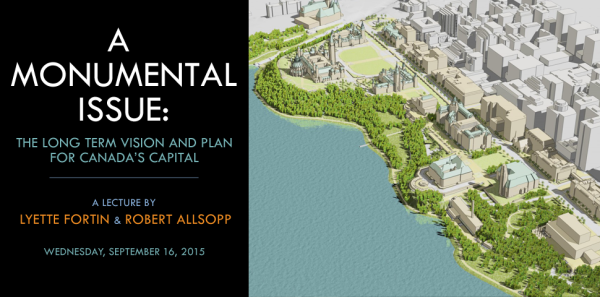
Planning for Ottawa has been underway since its choice as Canada’s capital in 1858. Focus of this planning has always been on the Parliamentary and Judicial Precincts located along Wellington Street. How have these plans evolved, and what is their current state?
The Long Term Vision and Plan for Ottawa’s Parliamentary and Judicial Precincts is now the focus of a national controversy, with plans to erect a large monument on a site originally identified for a third building to complete the "Judicial Triad" - the long planned-for Federal Court Building, to join the Justice Building, and the Supreme Court Building designed by Ernst Cormier.
This talk will examine the impact of the proposed Monument to the Victims of Communism on the Long Term Vision and Plan.
Lyette Fortin, Heritage Consultant, has worked as the Director of Architecture Strategic Planning for the House of Commons of the Parliament of Canada.
Robert Allsopp, leading urban designer has been a key figure in planning and design of the National Capital over the past thirty-five years. Robert prepared the 1987 Long Range Plan for the Parliamentary and the Judicial Precincts, and the plan’s update in 2007, with Roger du Toit and Peter Fletcher Smith of DTAH.
The Lecture is free and there is no need to pre-register.
City Water and Country Air: Rockcliffe Park at 150
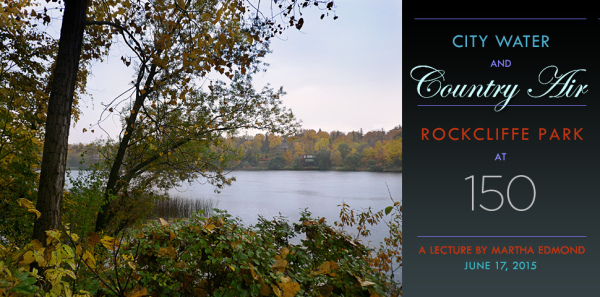
Rockcliffe Park has long been a Village within a city setting. Its early history is closely linked to Frederick Law Olmsted, whose remarkable planning philosophy was imported to Canada by entrepreneur T. C. Keefer. Historian Martha Edmond will explore the origins and present character of Rockcliffe with particular emphasis on development pressures that now put the Olmsted/Keefer vision to the test.
20th Century Built Heritage Symposium / NCC Capital Urbanism Lab
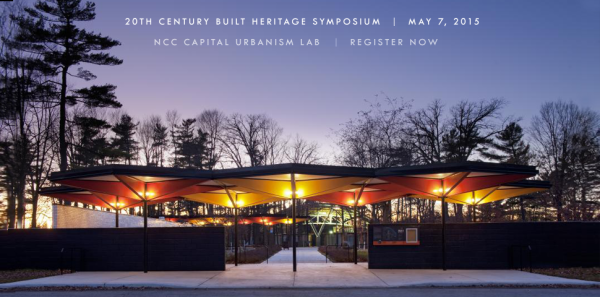
In celebration of the 10th Anniversary of the Conserving the Modern in Canada Conference held at Trent University in 2005, the National Capital Commission's Capital Urbanism Lab is pleased to invite the public to Conserving the Modern, a discussion on conserving the legacy of modern architecture and design.
Architects, landscape architects and engineers of the 20th century used experimental materials and construction techniques to create buildings and shape places. They espoused radical new philosophies in their architecture, dramatically changing the shape of our cities. Today, this modern heritage is threatened, as new philosophical approaches take hold, and as the "modern" is seen as outdated and not worthy of conservation.
Our panel will discuss the emergence of modernism, the architectural legacy we have inherited, and why and how we should conserve our "modern" heritage.
The panel will consist of the following experts:
Susan Algie, Director, Winnipeg Architecture Foundation Francine Vanlaethem, Professor, Université du Quebec à Montreal, and author of Patrimoine en devenir: l'architecture moderne du Québec Michael McClelland, Principal, ERA Architects, and co-editor of Concrete TorontoThe public will have the opportunity to address their comments and questions to the expert panel.
The event begins at 6:00pm at the National Capital Commission (NCC) Headquarters, Capital Urbanism Lab, 40 Elgin Street, 5th floor.
Please RSVP to info@ncc-ccn.caPLEASE BOOK EARLY, AS SPACE IS LIMITED. Registration is on a first-come, first-serve basis.
Simultaneous translation will be available and the event will be universally accessible. Please contact the NCC if you have any special needs.
For more information, visit the event page on the National Capital Commission's Capital Urbanism Lab website.
Proceedings of the 2005 Conserving the Modern Conference can be viewed by clicking here.
Ottawa’s Frontier Modernism
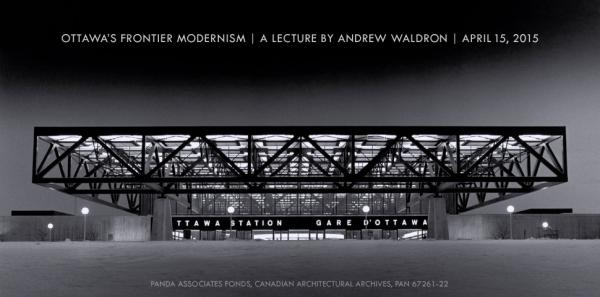
Beginning as a settlement built on the forest frontier, Ottawa has largely been shaped by Modern ideas over the past two centuries. Since Confederation, it has had a complicated relationship with the rest of Canada and with its own self-identity as a city. Told through Ottawa’s buildings and landscapes this presentation examines Ottawa’s modern built heritage, recounting how Ottawa was often on the ‘frontier’ of modern architecture.
Taking Care of Business: The Mausoleum Promoter and the Cemetery
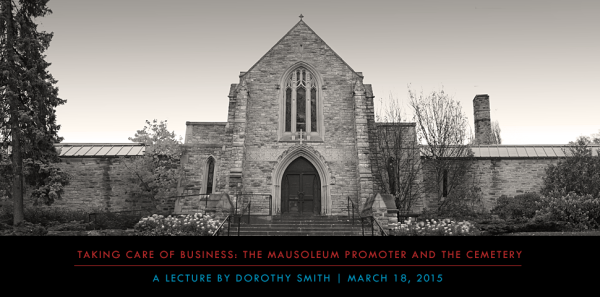
Beechwood Cemetery was established in Ottawa in 1873. Now almost one hundred and fifty years old, it is recognized for its naturalistic, pastoral and picturesque landscape. It features a number of prominent elements, among them the 1930s Gothic Revival Beechwood Community Mausoleum. While the Mausoleum stands today as an ornament in the cemetery grounds, this lecture will explore the intriguing story behind its construction as one of speculation, ambition, and ultimately loss for all involved.
Photo: Danielle Jones
The Way Forward for Heritage in the Capital: Beginning A New Conversation
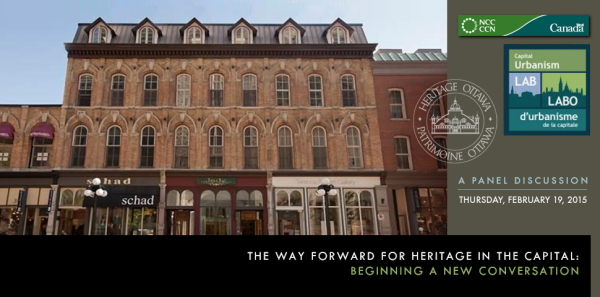
The National Capital Commission (NCC) and Heritage Ottawa are proud to present a panel discussion about emerging ideas in Canadian and international heritage conservation, and how these ideas might inspire conservation in Canada's Capital.
Entitled The Way Forward for Heritage in the Capital: Beginning a New Conversation, the panel features the following leading heritage thinkers:
VICTORIA ANGEL: Senior Heritage Planner with ERA Architects Inc. ODILE ROY: Director, Design Division, Architecture and Heritage, Ville de Quebec CATHERINE NASMITH: Heritage Architect and Advocate; President, Toronto Branch of the Architectural Conservancy of OntarioThis promises to be a dynamic presentation of great interest all who care about heritage in Ottawa and the National Capital Region. The public will have the opportunity to address their comments and questions to the expert panel.
Please note that this event takes place at NCC Headquarters, address below, beginning at 6:00 pm.
Space is limited.
Please send an RSVP by noon on Wednesday, February 18, 2015 to info@ncc-ccn.ca .
This event is part of the Capital Urbanism Lab program, an initiative of the National Capital Commission. For more information, please visit the event page on the NCC website.
Simultaneous translation will be available.
National Capital Commission Parkway System “All Roads Lead to Parliament Hill”
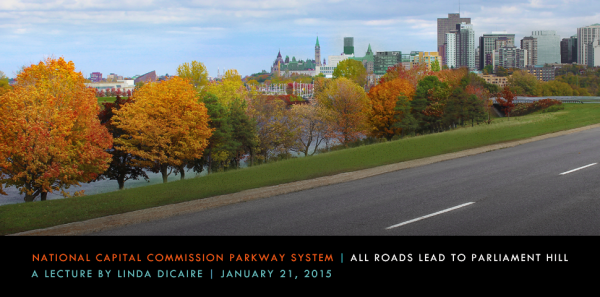
Ottawa is home to some of the loveliest shoreline driveways in the world with the Rideau Canal Driveway, the first beautification project of the capital. This lecture will present the history of the driveways and parkways that grace the Rideau Canal and the Ottawa River, and position their significance as cultural landscapes to be treasured and as a source of pride here and among capital cities.
Photo: Linda Dicaire
Art or Selfie? Canadian Portraits High and Low
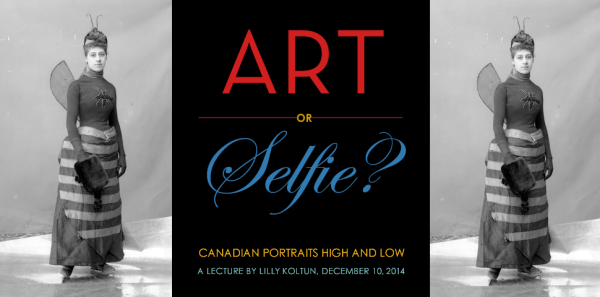
Dr. Lilly Koltun will lead an irreverant promenade through the history of portraiture in Canada, leaving us to wonder at the unexpected wealth we've inherited in that art as well as the challenging lives of the people who bequeathed their portraits to us. Not least, we'll recognize the enduring love we have of seeing and presenting ourselves!
The East Block: An Exemplary Example of High Victorian Gothic
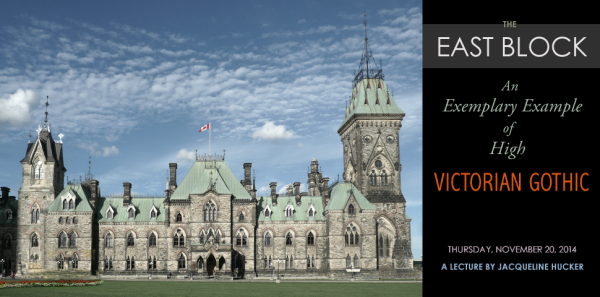
The East Block was designed in 1859 as one of the first Gothic Revival office buildings and it was an early example of the style’s first phase of development. The talk will focus upon how the East Block’s High Victorian Gothic style was influenced by the challenges of new urbanism. It illustrates the debates that surrounded the style’s development, including the influence of Ruskin and Scott, and contemporary scientific discoveries.
Emerging Scholars and Ottawa Architecture / 1 of 2
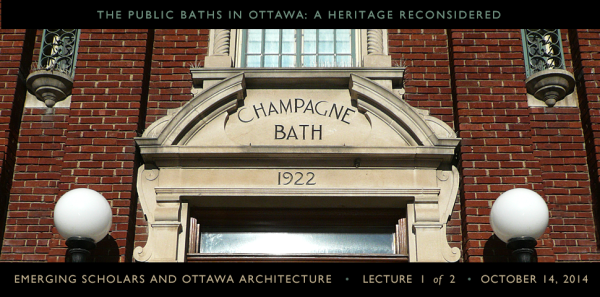
This month’s lecture features two talks on local monuments. Meredith Stewart offers a new perspective on the heritage value of the Champagne and Plant Baths “The Public Baths in Ottawa: A Heritage Reconsidered.” Caitlin Charbonneau situates Lowertown’s St. Brigid’s Centre for the Arts in broader context with her talk on “Threatened Churches and the Preservation of Heritage Values: Adaptive Reuse of Ontario Churches.”
Emerging Scholars and Ottawa Architecture / 2 of 2
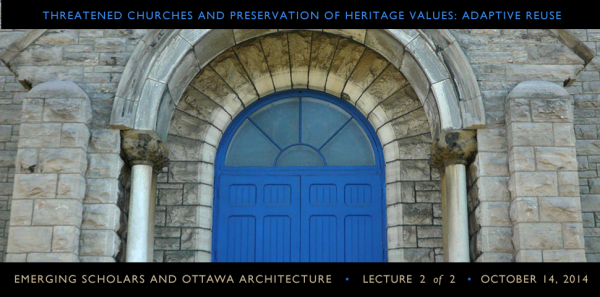
This month’s lecture features two talks on local monuments. Meredith Stewart offers a new perspective on the heritage value of the Champagne and Plant Baths “The Public Baths in Ottawa: A Heritage Reconsidered.” Caitlin Charbonneau situates Lowertown’s St. Brigid’s Centre for the Arts in broader context with her talk on “Threatened Churches and the Preservation of Heritage Values: Adaptive Reuse of Ontario Churches.”
A.W.N. Pugin and the Revolution in Residential Architecture
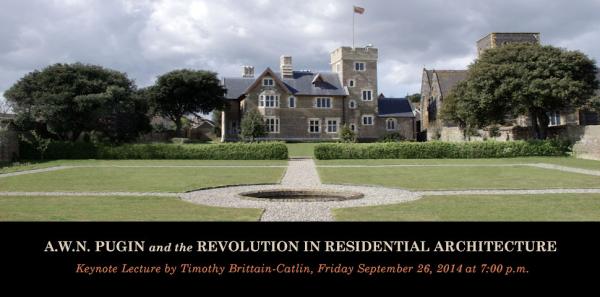
A.W.N. Pugin, best known as a designer of Gothic churches and the decoration of the Palace of Westminster, perhaps had his greatest impact designing residences that were completely different from any historic precedent. Their most important feature was the pinwheel plan, where rooms revolve around a central staircase hall. This lecture will introduce us to Pugin and the Gothic Revival and the influence of his neglected domestic architecture on later English residential building.
This lecture is also the keynote of a two-day colloquium, The Origins and Significance of Residential Gothic Architecture in Ottawa. The colloquium includes tours, lectures on Pugin’s influence in Ottawa, and an exhibit. Please see the following listing for more information.
PHOTO: A.W.N. Pugin's "The Grange" / Stair Hall reproduced by kind permission of Cathedral Communications Limited.
The Origins and Significance of Residential Gothic Architecture in Ottawa
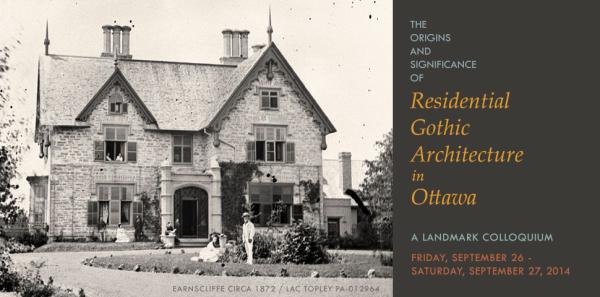
The competition for design of the Parliament Buildings in the late 1850s drew to Ottawa several English architects who introduced popular Gothic domestic forms that helped transform the housing stock of a rough lumber town to befit a dawning capital.
This landmark colloquium examines Ottawa’s domestic Gothic architecture through a series of lectures, tours and an exhibit taking place over two days on Friday, September 26 and Saturday, September 27, 2014.
Optional tours on Friday include Earnscliffe and two Gothic revival churches: Hamnett Pinhey’s Old St Mary’s (1822-25) and its successor New St Mary’s (1909 ), adjuncts to the Pinhey Estate along the Ottawa River. The keynote address by Timothy Brittain-Catlin, an authority on the architecture of A.W.N. Pugin, takes place on Friday evening at St. Alban’s Church, located at 454 King Edward Avenue at Daly Avenue.
On Saturday morning, a related exhibit will be on display at Carleton University's River Building and David Jeanes of Heritage Ottawa will present a talk on Ottawa’s Confederation Era Tudor Gothic Mansions. Following will be a talk entitled Glimpses of Gothic Architecture in an Archaeological Framework, delivered by Ian Badgley, Archaeologist with the Heritage Program of the National Capital Commission. An optional bus tour of Ottawa’s surviving pinwheel-plan houses will then depart from Carleton University.
All lectures are free. Fee for the entire conference, including tours, is $30.
Tour places are limited so early registration is strongly encouraged. The deadline for tour registration is September 17, 2014. To register, please contact Bruce.Elliott@carleton.ca
For further information, please download the Colloquium Flyer at the link provided below.